
Patient Safety and Incident Reporting System
Safety is not an option, its rather a culture. In healthcare, responsibility lies on the healthcare workers to ensure patients away from any kinds of harm. To promote patient safety, a culture of incident reporting must be encouraged within the organizations.
What is Patient Safety?
• Safety: Protection from harm
• Preventing errors and harm to patients during care.
• Ensuring safe systems, safe staff, safe environment.
• Goal: to prevent death and injury from preventable medical errors through system-wide changes.
• Example: Giving wrong medication vs. double-checking before administration.
Medical error as “an act of omission (failure to do the right thing) or commission (doing the right thing wrong) in planning or execution that contributes or could contribute to an unintended result”
“Every Error is a lesson, not a blame”
Objectives
• Understand the concept of Patient safety.
• Learn about Incident types & the reporting process.
• Realize the importance of a non-punitive culture.
• Know RCA & CAPA connect to safety improvement.
Example –Act of Omission: A nurse missed giving the prescribed antibiotic dose at 8:00 pm.
A lab test ordered by the doctor was not sent to the laboratory.
Example – Act of Commission: Giving the wrong medication to the wrong patient.
Administering insulin to the wrong patient.
Why Patient Safety Matters?
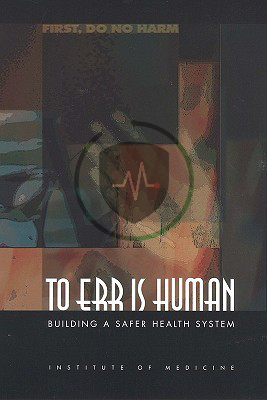
• “To Err is Human”– even small mistakes can cause big harm.
• 5/10 Rights of medication, infection prevention and control, safe surgery.
• Builds patient trust and hospital reputation.
Patient safety Practices recommended for
implementation by AHRQ
(Agency for Research & Quality)
Strongly encourage implementation
• Hand hygiene
• Barrier precautions to prevent healthcare-associated infections
• “Do Not Use” list of hazardous abbreviations
• Preoperative checklists and anesthesia checklists
• Use of real-time ultrasound for central line placement
• Bundles include checklists for central line insertion and care
• Bundles include head-of-bed elevation, sedation vacations, oral care with chlorhexidine and subglottic-suctioning endotracheal tubes
• Interventions to reduce urinary catheter use, including catheter reminders, stop orders, or nurse-initiated removal protocols
• Multicomponent interventions to reduce pressure ulcers
• Interventions to improve prophylaxis for VTE
• Multicomponent interventions to reduce falls
• Use of clinical pharmacists to reduce adverse drug
• Computerized provider order entry
• Medication reconciliation events
• Obtaining informed consent to improve patients’ understanding of the potential risks of procedures
• Use of surgical outcome measurements and report cards such as the American College of Surgeons National Surgical Quality Improvement program
• 8 Practices to reduce radiation exposure from fluoroscopy and computed tomography scans
• Documentation of patient preferences for life-sustaining treatment
• Rapid response systems
• Utilization cf complementary methods for detecting adverse events/medical errors to monitor for patient safety problems
• Team training
• Use of simulation exercises in patient safety efforts
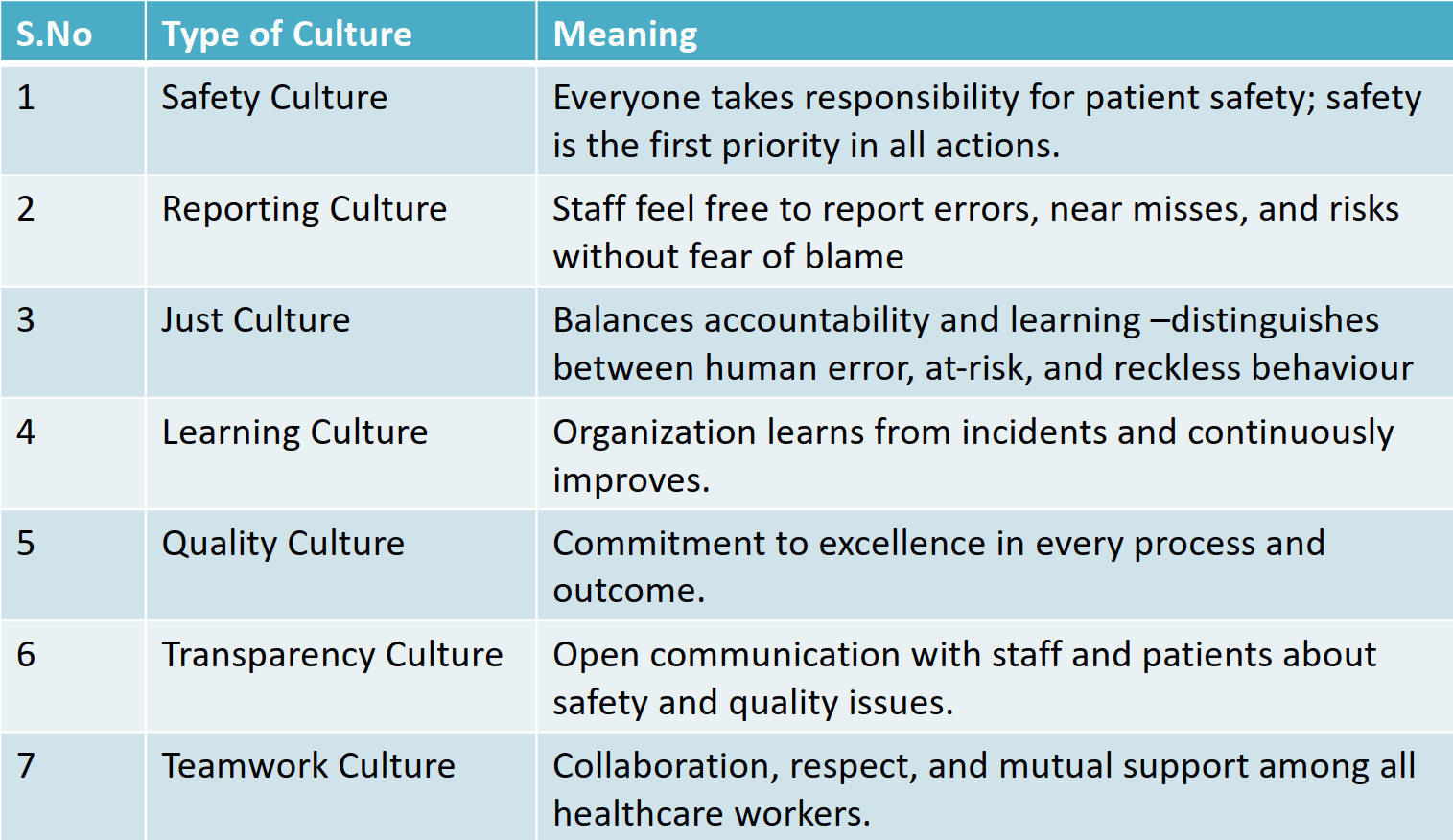
Different Forms of Culture
“Blame Fixes Nothing;
Learning Fixes Everything”
Non-Punitive Culture
• Reporting & No Blaming
• Focus on system improvement.
• Encourage openness and teamwork.
TRUST REPORT– IMPROVE CYCLE
• In the trust-report-improve cycle, trust promotes reporting, which leads to improvement, which in turn fosters trust.
What is an Incident?
• Any event that could or did result in harm to a patient, visitor, or staff.
Examples: Fall, medication error, wrong label, near miss, needle stick.
• Types: Near Miss / No Harm / Adverse Event / Sentinel Event
Steps of Incident Reporting System
1. Identify the event.
2. Ensure immediate safety.
3. Inform your Supervisor / Department Head / Quality Department
4. Document the Incident in the Incident Reporting Form.
5. Submit within 24 hours.
6. Review & RCA by the involved team and Quality Department.
7. CAPA Implementation.
8. Follow-up
9. Closure & Feedback
How to Encourage Incident Reporting?
• Simplify reporting form.
• Ensure anonymity if needed.
• Share “lessons learnt” in meetings.
• Celebrate “safety champions & Quality champions”
Recap & Closing
“Safety is not expensive, it’s priceless.
• Every staff is a Safety Officer.
• Reporting saves lives.
• Learn. Act. Improve
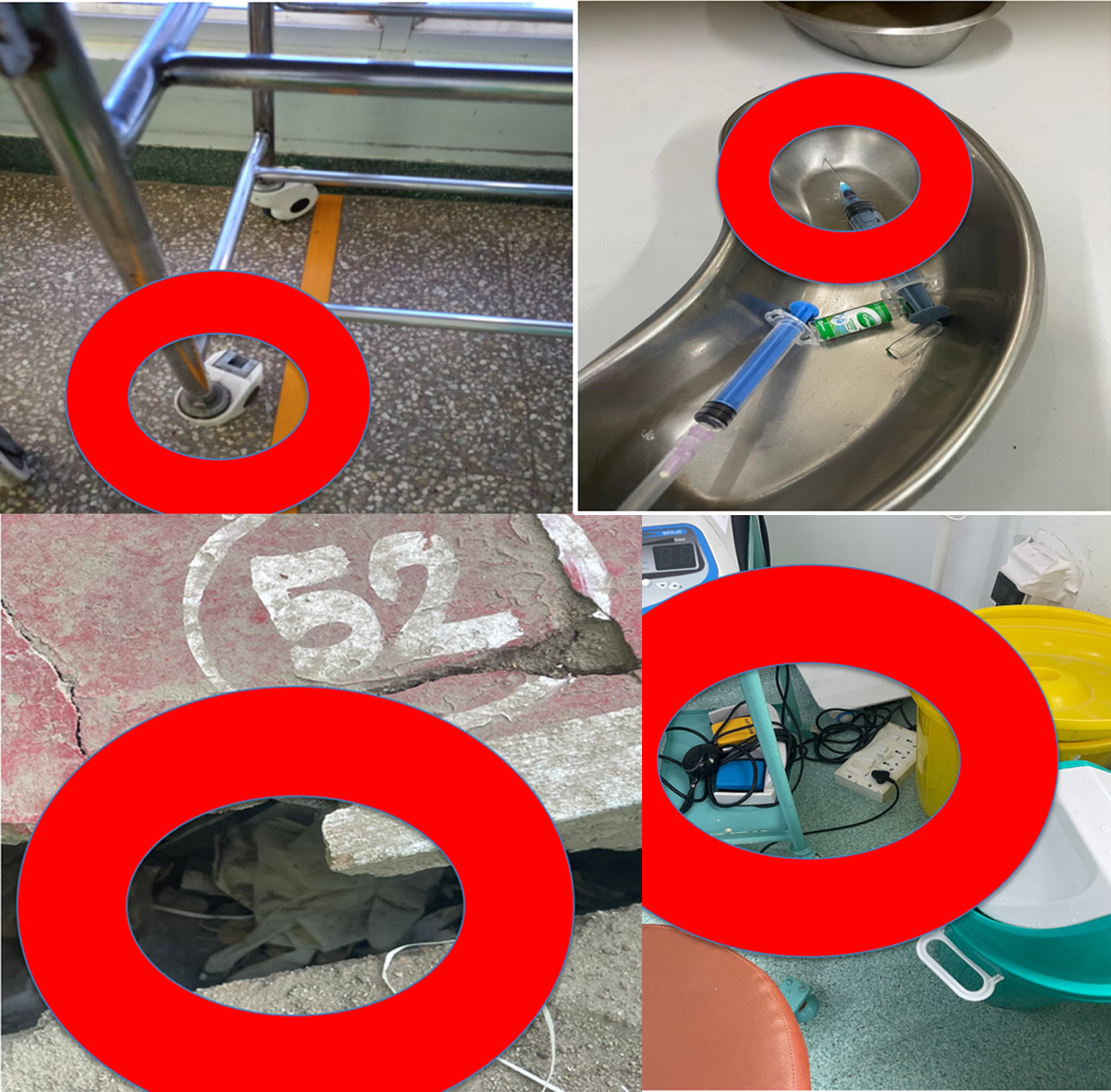
Quality Activity:
Spot the Error
Share with others and enjoy the PatientSafety360 Journey.
PatientSafety360 is an official forum where you can get each and every type of educational resource, which ultimately benefits patients. Do comment if you want to contribute to make this world safe for both patients and healthcare workers. For any queries, contact us at PatientSafety360@gmail.com.

Hi, this is a comment.
To get started with moderating, editing, and deleting comments, please visit the Comments screen in the dashboard.