Healthcare waste management (HCWM)
Healthcare waste management (HCWM)

Healthcare waste management (HCWM)
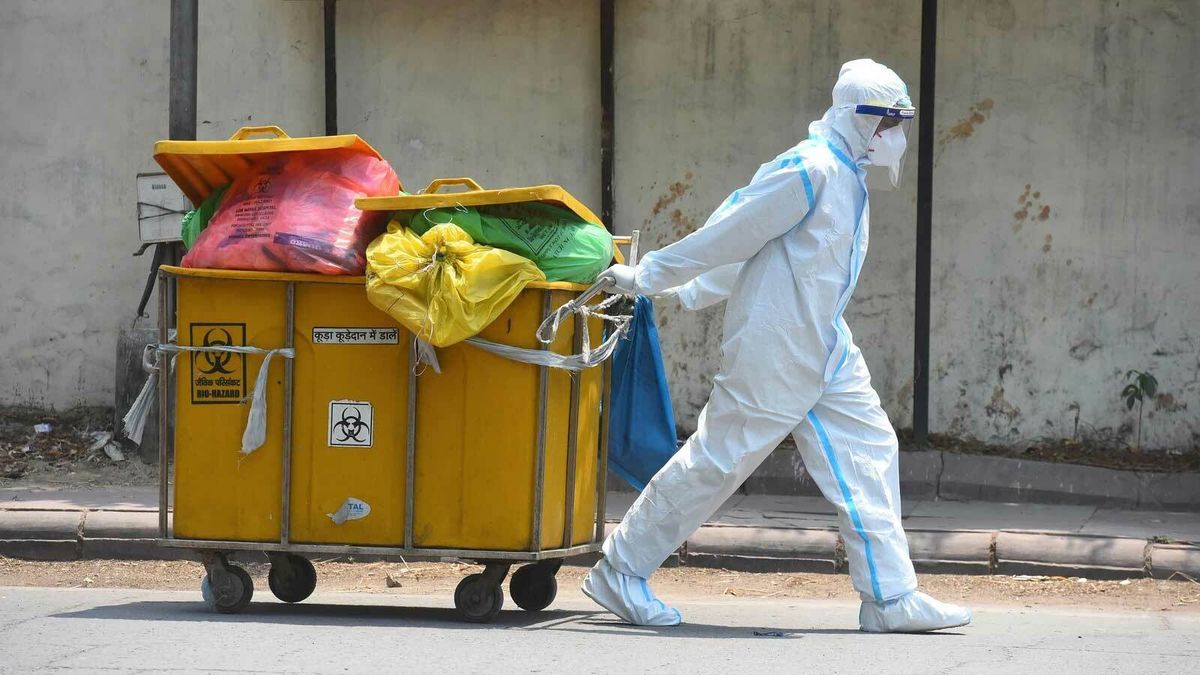
Healthcare waste management (HCWM) remains a major challenge for health facilities in developing countries where the healthcare staff and surrounding population is exposed to risks due to poor handling of the hazardous waste. The risk waste generated by hospitals worldwide includes used syringes, bandages, intravenous drip bottles, blood bags, urine bags, catheters; biomedical waste such as organs and medical instruments. Sharp objects have the highest rate of causing injuries to hospital staff and pose greatest threat by transmission of
deadly infections like HIV, Hepatitis B and Hepatitis C viruses. Healthcare Waste Managment is an integral part of patient safety.
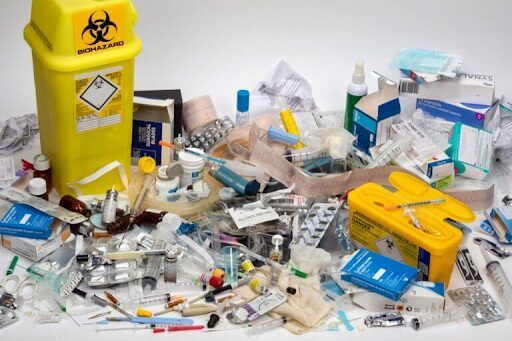
About 12,000 Millions injections are used per year.
Approximately 15% of the hospital waste
is anatomical with infectious and sharps constituting 1% of total health care waste globally. High income countries are estimated to produce up to 6 kg per bed per day, while low income countries are estimated to produce about 3 Kg of hospital waste per bed per day respectively Globally hospital waste is regarded as a hazardous, therefore, it has to be treated accordingly. Everyone could exposed to health risks from infectious waste. The improper disposal of bio-medical waste includes open dumping and uncontrolled burning. Bio-medical waste gets mixed with other waste, & contaminates all waste; increasing the overall quantum of risk waste.
World Health Organization (WHO)
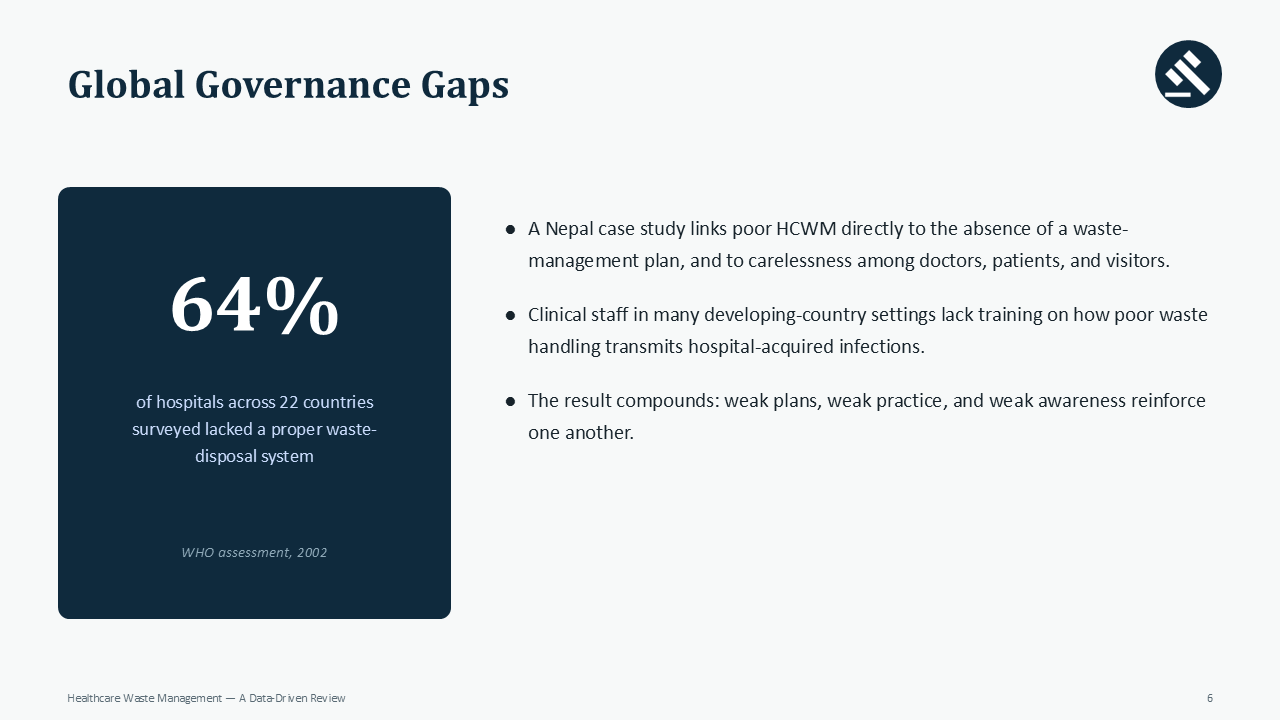
According to a World Health Organization (WHO) assessment there were about 22 countries in 2002 which had about 64% hospitals with no proper waste disposal systems. Hospitals in developing countries including Asia suffer from a lack of proper management of waste. A study from Nepal showed that it was due to the lack of waste management plan and carelessness of doctors, patients and visitors. The clinical staff in developing countries lacks knowledge about the transmission of hospital acquired infections caused by poor handling of
healthcare waste, poor attitude of staff towards hospital discipline, and improper training of staff on HCWM.
Pakistan Prepective: Healthcare waste management (HCWM)
Per hospoital bed 1.35 kg HCW is produced daily in Pakistan. There are about 140,000 hospital beds in Pakistan and about 2 Kg of waste per bed produced every day. ADP Reform Road Map on Solid Waste Management, the country generates HW at rate of about 0.667/kgs per hospital bed/day. On average; out of which About 10%–25% is infectious, and hence hazardous (ADB, March 2022). Most of the hospitals and independently working physicians in Pakistan, do not have systems to comply with safe healthcare waste management practices.
Media Coverage
In Pakistan, pilferage of hospital waste is evident in the print media very often. The practice poses the risk of spreading infection in general public through recycled products made from hazardous waste. It also carries great risk of exposure to deadly infections for the scavengers. Who collect used syringes for use by IV drug users, or for recycling industry. Who tend to get bio-grade high quality plastic from black market.
Health workers in lower tiers of healthcare in Pakistan suffer from sharp injuries even worse than those in the hospitals. About 54% of health worker had suffered at least one injury within 6 months at first level care facilities.
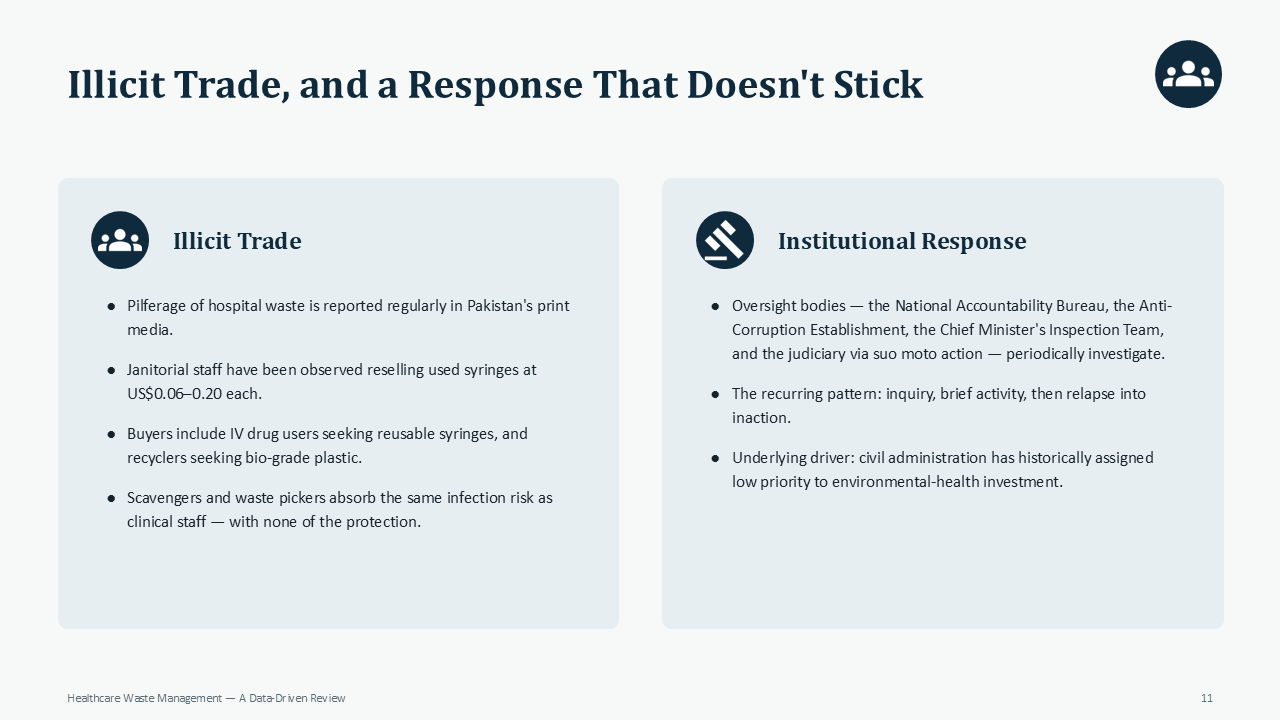
The janitorial staff in Pakistan, in particular, is found to be involved in selling the used syringes to the black market within a selling price of US$ 0.06–0.2 per syringe.
Waste management techniques
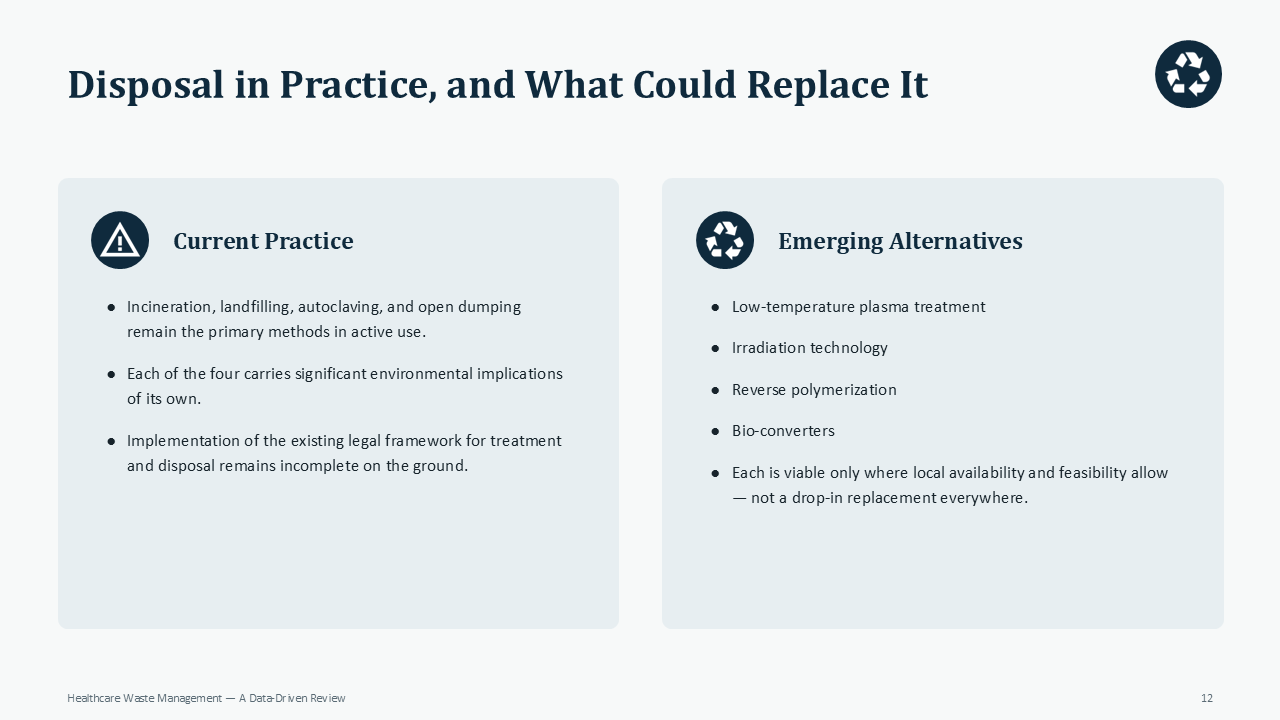
The waste management techniques (incineration, landfilling, autoclave and open dumping) in
hospitals have serious environmental implications.
Share with others and enjoy the PatientSafety360 Journey.
PatientSafety360 is an official forum where you can get each and every type of educational resource, which ultimately benefits patients. Do comment if you want to contribute to make this world safe for both patients and healthcare workers. For any queries, contact us at PatientSafety360@gmail.com.

Hi, this is a comment.
To get started with moderating, editing, and deleting comments, please visit the Comments screen in the dashboard.